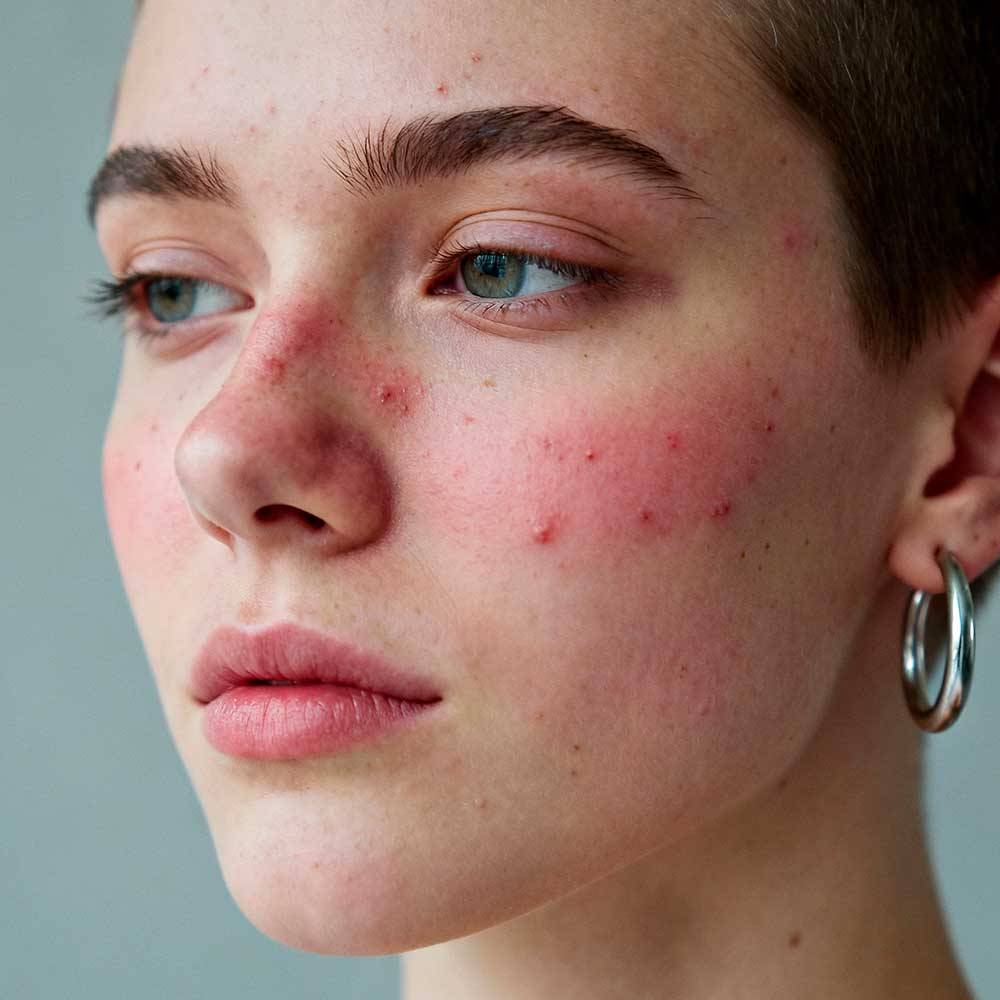
What is Rosacea?
Rosacea is a skin condition that primarily affects the face, especially the central part. This condition is characterized by redness (erythema), swelling (edema), the prominence of small blood vessels, and the formation of acne-like pustules on the skin. Rosacea typically affects the central areas of the face, including the cheeks, nose, forehead, and chin. While the exact cause of the condition is unknown, it is believed to be influenced by genetic and environmental factors.
Rosacea follows a pattern of flare-ups and remissions. Managing rosacea involves reducing symptoms, controlling triggering factors, and regulating skin care.
How is Rosacea Treated?
Topical Creams and Lotions
Dermatologists often recommend topical products with anti-inflammatory, antibacterial, or vasoconstrictive properties.
Oral Medications
Oral medications may be used to relief prominent rosacea symptoms.
Laser and Light Therapies
Laser or light therapies can be used to narrow blood vessels and reduce redness.
Skincare
Establishing a proper skincare routine is crucial. Using products formulated for sensitive skin and applying sunscreen can help manage rosacea symptoms.
Controlling Triggering Factors
Avoiding or limiting triggering factors like alcohol, hot beverages, spicy foods, and sun exposure can reduce flare-ups.
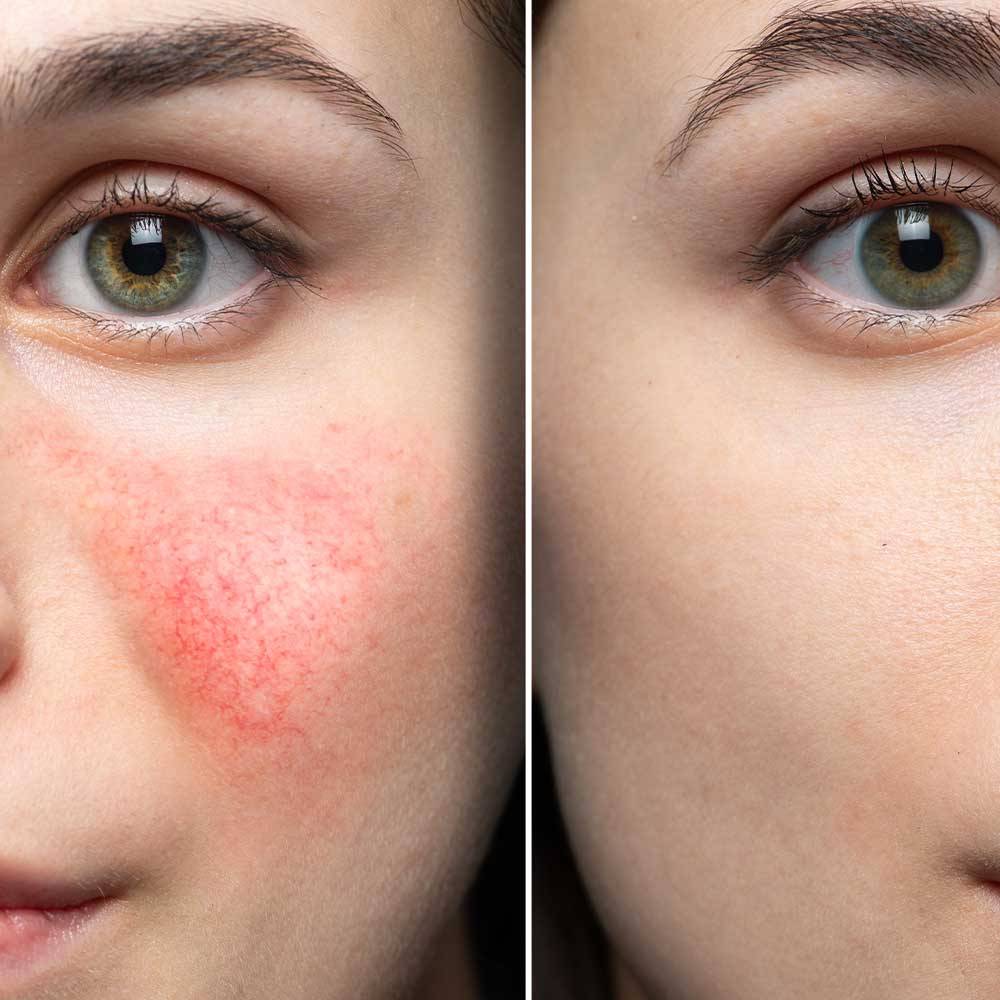
What Are the Symptoms of Rosacea?
- Facial Redness (Erythema): Pronounced redness, especially on the cheeks, nose, forehead, and chin.
- Prominent Blood Vessels (Telangiectasia): Visible fine blood vessels on the face.
- Skin Swelling and Edema: Swelling and edema on the face.
- Acne-Like Bubbles (Papulopustular Rosacea): Appearance of redness along with acne-like bubbles.
- Eye Problems: Eye irritation, dryness, and a burning sensation (ocular rosacea).
Who Is More Prone to Rosacea?
Rosacea is more commonly seen in middle-aged individuals and those with fair skin. However, it can develop at any age and affect individuals with various skin types. Family history and genetic factors can also influence the risk.
What Are the Causes of Rosacea?
- Genetic Predisposition
- Skin Inflammation
- Capillary Vessel Issues
- Demodex Mites
- Environmental Factors
Skin Care Recommendations
- Gentle Cleaning: Use parfume-free and alcohol-free cleaners.
- Cold Water: Washing with cold water can help reduce redness.
- Sensitive Skin Products: Choose products formulated for sensitive skin.
- Sun Protection: Apply broad-spectrum sunscreen daily.
- Avoiding Triggering Factors: Limit hot beverages, spicy foods, and alcohol.
- Stress Management: Effective stress management techniques are essential.