
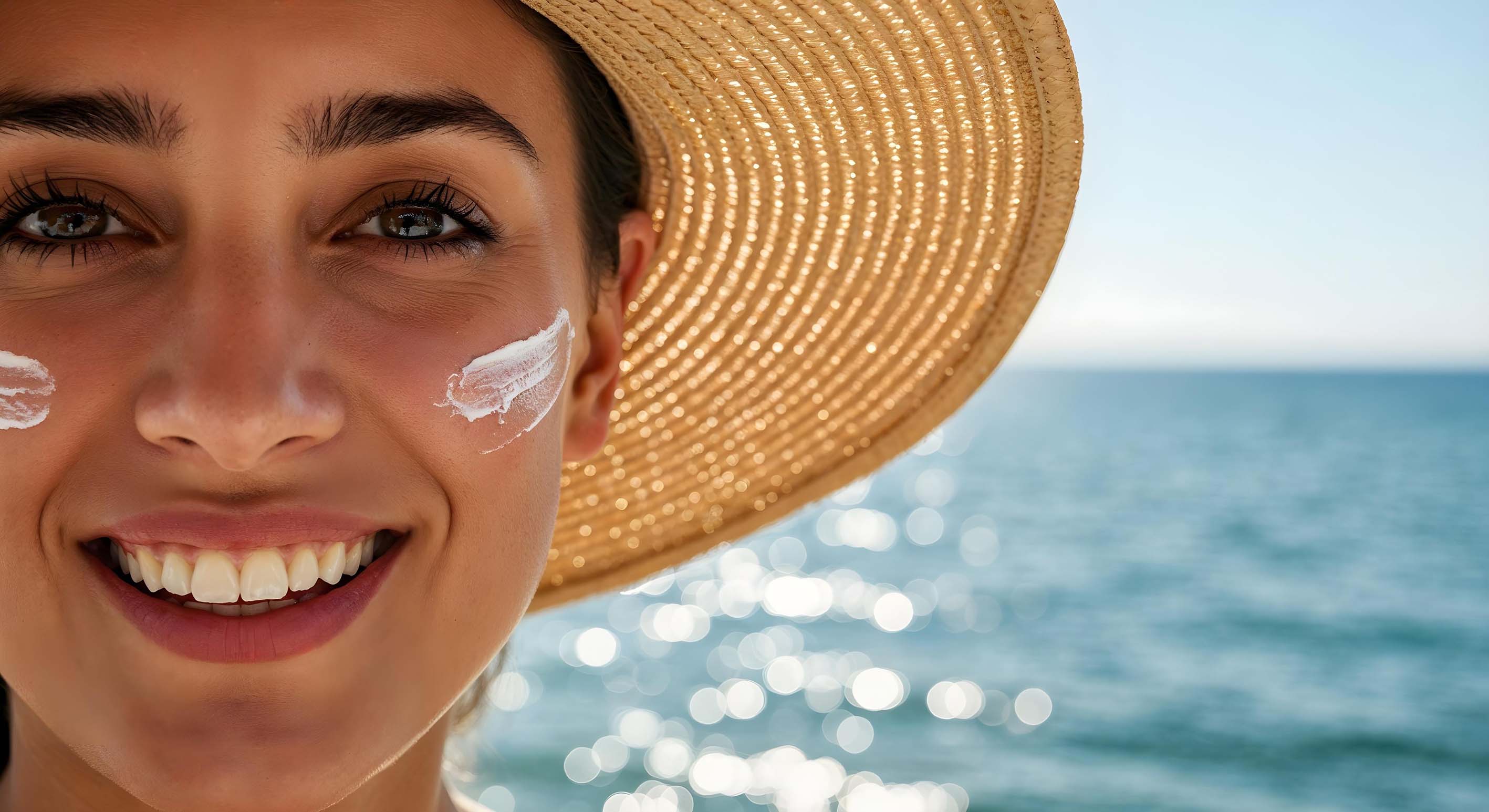
Skin care in late summer is more important than ever. In summer, the most sunny period of the year, the skin is affected by sun rays. Moisture and temperature changes also create negative effects on the skin.
Seasonal transitions are times when our skin needs special attention. For this reason, we need to change our facial skin care routine.
Skin Care in Summer: The Most Common Mistakes
As the effect of hot weather and the sun increases, we need to make changes in our skin care routine. This way, we can better protect our skin against the harsh conditions of summer. There are some mistakes we should avoid when doing skin care in summer. Knowing these mistakes and taking precautions is of great importance for our skin to remain healthy. For this reason, proper information and application are required.
Not Using Sunscreen
The majority of skin conditions are caused by exposure to the sun's UVA and UVB rays. Just applying sunscreen is not enough to provide this protection. For this reason, you should choose a high-SPF sunscreen suitable for your skin type. You should also apply the cream 30 minutes before going out.
You should also not neglect to reapply sunscreen every 2-4 hours. You should always refresh the cream after entering the sea or pool or sweating. Remember that you should apply sunscreen not only to your face but also to the neck area. Because the neck is the area where signs of aging are most often seen.
This way, you can better protect your skin from the harmful effects of the sun. The use of sunglasses and hats is also very important. For this reason, you should support your daily protection routine with these products.
Walking Around With Heavy Makeup
Wearing heavy makeup on hot summer days can lead to serious skin problems. When sweat mixes with makeup products, pores become clogged. This accelerates acne formation, especially in oily skin. Thus, the skin's ability to breathe is prevented and problems can increase.
Heavy makeup causes bacterial buildup in a hot and humid environment. This increases the risk of infection, inflammation, redness, and irritation. For this reason, in the summer season and for late summer skin care, it would be more appropriate to prefer a tinted sunscreen alone instead of multiple products.
Not Moisturizing the Skin Sufficiently
One of the most important steps in facial skin care is the moisture balance of the skin. However, it is beneficial to review our moisturizer preference in hot summer months. Because thick-textured moisturizers can make the skin look excessively oily. This can lead to different skin problems.
It is more appropriate to use light and quickly absorbed moisturizers in the summer. Additionally, the body's water needs increase in the summer months. Due to the sun and hot weather, the skin loses water quickly. For this reason, moisturizer products alone are often not enough.
For this reason, we should support our skin's moisture balance by drinking plenty of water. Thus, our skin can stay healthier and more vibrant.
Skin Care in Summer: What Can Be Safely Used
On hot summer days, your skin's needs change. For this reason, certain special ingredients become more important in summer. The following applications provide protection against the harmful effects of the sun. Thus, they help your skin stay moisturized and healthy.
- Hyaluronic Acid Injections: Preserves the skin's moisture balance, providing fullness and elasticity. By supporting the skin against increased moisture loss in summer, it provides a more vibrant and healthy appearance.
- Botox: In addition to reducing expression lines, it is also frequently applied for excessive sweating (hyperhidrosis) in summer months. Thus, it offers benefits both aesthetically and in terms of comfort.
- Mesotherapy: With its vitamin, mineral, and hyaluronic acid contents, it deeply moisturizes the skin. By reducing dryness and dullness caused by the sun, it gives the skin freshness.
- Youth Vaccine (Salmon DNA, etc.): Increases collagen and elastin production, providing skin firming. Helps the skin that has lost its moisture in summer to recover and renew.
- PRP (Platelet Rich Plasma): The application performed with plasma obtained from the person's own blood supports skin renewal. It has a repairing effect against the negative effects of the sun in summer.
In addition to applications, supportive vitamins are also used.
- Vitamin C: One of the antioxidants most frequently recommended by dermatologists, vitamin C provides extra protection against UV damage when used together with sunscreen in summer months. Regular application evens out skin tone, reduces the risk of pigmentation, and gives the skin radiance.
- Niacinamide (Vitamin B3): Niacinamide, which provides sebum balance in summer in oily and combination skin, is especially recommended for acne-prone skin. It reduces redness, strengthens the skin barrier, and improves pore appearance.
- Vitamin B5 (Panthenol): Vitamin B5, known for its skin-moisturizing and repairing effect, stands out as a barrier-strengthening ingredient in dermatological care. It soothes skin worn out by summer, prevents moisture loss, and provides a smoother appearance.
- Aloe Vera and Soothing Ingredients: Products containing aloe vera are frequently recommended in post-laser, peeling, or sun care. They cool, moisturize, and soothe the skin, both accelerating healing and preventing irritation.
Skin Care in Summer: Things That Should Be Used With Caution
On sunny days, it is necessary to be careful when using some active ingredients. When doing skin care in late summer, the proper use of these ingredients is important so as not to increase the skin's sun sensitivity.
Retinol
Retinol, a form of vitamin A, is a powerful active ingredient that supports skin renewal. It increases collagen production, reduces the appearance of wrinkles, and prevents acne formation. However, when it interacts with sun rays, it can make the skin sensitive. For this reason, active ingredients such as retinols should be used in the evening routine and sunscreen must be applied the next day.
AHA and BHA Acids
AHA (Alpha Hydroxy Acid) and BHA (Beta Hydroxy Acid) are exfoliating acids that purify dead skin cells. AHAs address skin pigmentation issues, while BHAs stand out with their antibacterial properties. These acids can repair sun-damaged skin but can also make the skin more sensitive to the sun. For this reason, they should be used carefully in your skin care routine.

Glycolic Acid and Salicylic Acid
Glycolic acid is a type of AHA obtained from sugarcane that effectively removes dead cells from the skin. Salicylic acid is a type of BHA that provides deep cleansing of pores and is used in acne treatment. Both acids can make the skin sensitive to the sun when used in summer. The combined use of glycolic acid and salicylic acid is especially not recommended.
Timing of Use and Sun Protection
The safest option in summer is to use acid-containing products at night. Products containing AHA (2-10%) or BHA (0.5-2%) in low concentrations are safe in summer with proper use. While AHAs can be used 3-4 times a week and only at night, BHAs are more suitable for daily use. It is important to take a break from using these active ingredients at least a week before going on vacation and not to use them on days of long sun exposure. When using these active ingredients in facial skin care, broad-spectrum sunscreen (at least SPF 30) must be used and reapplied every 2 hours.
Care Applications to Avoid in Summer
Some skin care applications carry risks that should be completely avoided during the skin care in summer process. Using the right products at the right time is of great importance to protect your skin.
- Chemical Peeling: It renews the skin by peeling its upper layer, but its application in summer increases the risk of sun sensitivity and pigmentation in the skin.
- Pigmentation Treatment: It is necessary to stay away from sun and tanning products for at least one month before starting pigmentation treatments. After treatment, sun protection and protection from pools/sea are also important.
- Dermapen (Microneedling): Supports skin renewal and collagen production. However, after application, the skin becomes very sensitive, and exposure to sunlight increases the risk of pigmentation and irritation. It is generally not recommended in summer months.
- Wrinkle and Sagging Treatments: Such procedures should be limited in summer or postponed to winter months; their effectiveness and safety may be reduced due to sun sensitivity.
In conclusion, when doing late summer skin care, properly understanding your skin's needs and choosing products accordingly is essential. Adopting a skin care routine that adapts to the changing humidity and temperature conditions of summer will protect your skin and keep it looking healthy. Using sunscreen during the day and preferring appropriate products to moisturize and repair the skin in the evening will help you maintain your skin's radiance throughout the summer. Remember that the care you give your skin in summer will yield positive results in subsequent seasons as well.