
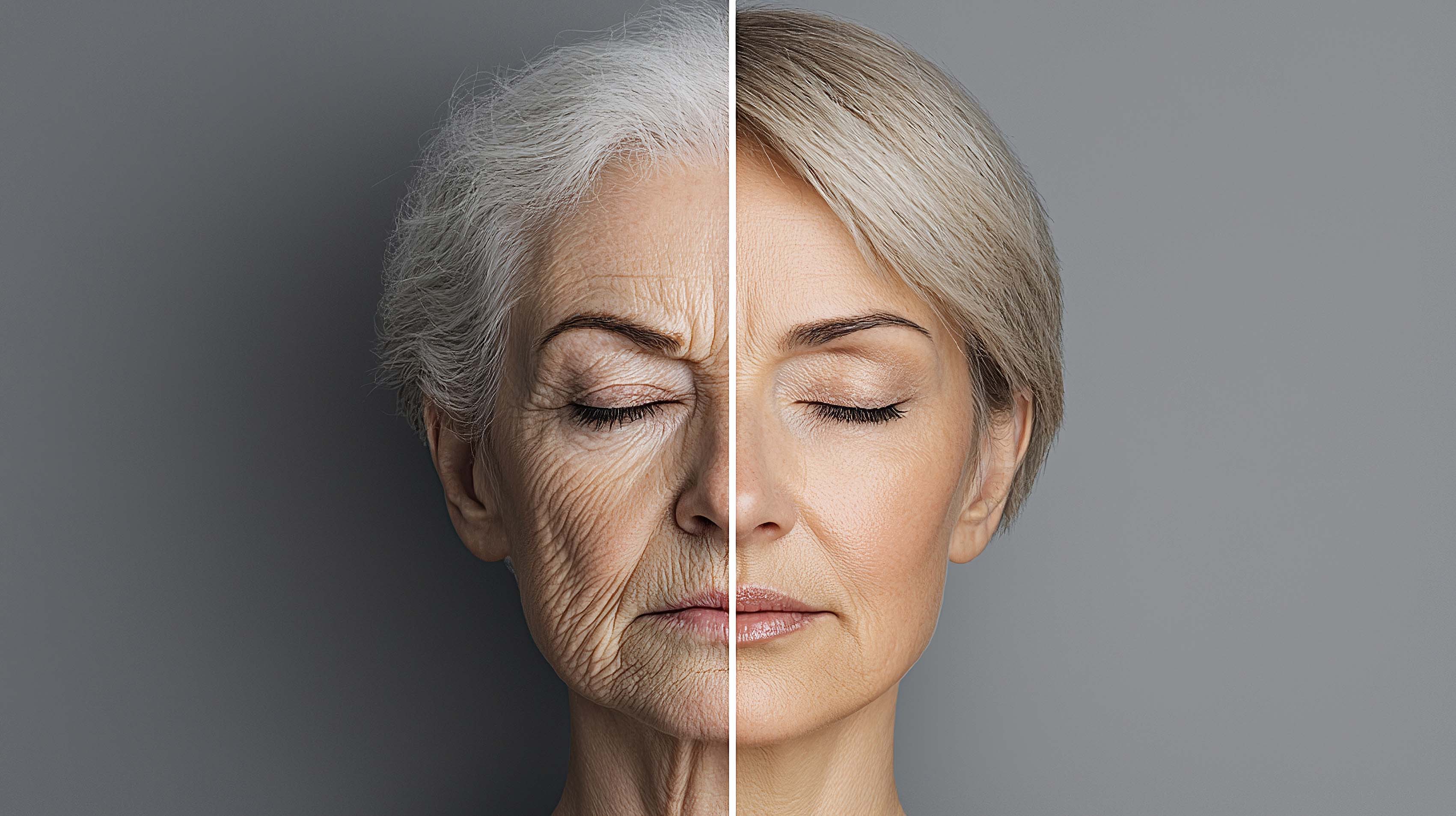
Stress and environmental factors brought by modern life can cause our skin to deteriorate over time. Anti-aging methods refer to a series of treatments and lifestyle strategies aimed at delaying or alleviating these signs of aging. In general, the first signs of skin aging begin to appear in the late 20s and early 30s.
Anti-Aging products and treatments aim to minimize age-related disorders. During the aging process, cells lose their renewal capacity and their functions slow down. Additionally, according to some research, healing can be up to 4 times slower in elderly people. In this article, we will answer questions such as what is anti-aging, why it is important, and which methods are effective.
What Is Anti-Aging?
The concept of anti-aging is the general name for treatments and methods that aim to reduce the visible effects of aging and slow down the aging process. The changes that occur in our body and skin as we age constitute the main goal of anti-aging applications. These applications can be in a wide range from simple moisturizer use to surgical interventions, laser applications, skin repair injections, and injectable filler applications.
Aging is a part of the natural life cycle of every living thing that begins at birth. Over time, the rate of cell renewal decreases and DNA damage accumulates. Symptoms such as wrinkles, loss of elasticity, and color changes appear on the skin due to the effect of free radicals. At the same time, the functions of internal organs also slow down. Anti-aging applications developed to slow down this process aim to support skin renewal and minimize the effects of aging.
Anti-aging is not just an aesthetic issue; it is a holistic approach that supports the process of healthy aging. In addition to products containing retinol, peptide, and antioxidant, aesthetic applications are also included in this scope. Factors such as nutrition, stress management, lifestyle, and skin care play a decisive role in the aging process. As the elderly population grows rapidly worldwide, the importance of anti-aging approaches is also emphasized more and more day by day.
In conclusion, anti-aging is a guide that aims to keep us alive, vigorous, and healthy at every moment of our life. Although it is not possible to completely stop aging, anti-aging applications slow down the effects of aging and improve the quality of life.
Why Is It Important?
The changes that occur in our body as we age are inevitable, but anti-aging applications are of great importance to manage this process. Aging is a natural process that occurs as a result of the slowing of cell renewal and the inability to make various syntheses. Age-related aging, which is also related to genetic structure, cannot be completely prevented, but it is possible to alleviate its effects.
Anti-aging applications are of great importance not only aesthetically but also in terms of slowing biological aging and protecting cellular health. During the aging process, collagen and elastin production in the skin decreases. This leads to problems such as wrinkles, sagging, and spots. Anti-aging products and applications increase the elasticity of the skin by supporting collagen production. They encourage cell renewal and protect skin health in the long term.
Environmental factors such as UV rays of the sun, smoking, alcohol, and inadequate nutrition also accelerate aging. At this point, anti-aging care plays an important protective role to reduce these negative effects. Skin dryness, which increases with age, is another element to be considered in this process. Anti-aging products with moisturizing content prevent cracking and wrinkles by preserving the elasticity of the skin. In addition, anti-aging approaches supported by regular exercise, healthy nutrition, and proper skin care positively affect not only external appearance but also overall quality of life and energy level.
What Are Anti-Aging Methods?
Today, there are various anti-aging methods to reduce the effects of aging. These methods offer different treatment options to alleviate signs of aging on the skin and slow biological aging. The most appropriate method can be determined according to the person's skin type, severity of aging signs, and general health condition.
Botox
Botox is at the forefront of anti-aging treatments and received FDA approval in 2002. Botox, produced from botulinum toxin, acts by creating temporary weakness in the muscle groups it is injected into. It is especially effective in reducing wrinkles on the forehead, between the eyebrows, and around the eyes. The success of botox treatment lies in being applied by an experienced expert. The procedure takes only 5-10 minutes and results begin to be seen after about 48 hours. Botox, whose effect lasts an average of 4-6 months, can also be used in the treatment of excessive sweating.
Filler Applications
Filler applications are used to eliminate volume loss in the skin and fill deep wrinkles. Hyaluronic acid-based fillers are the most preferred type. Since these substances are naturally found in the body, the risk of allergic reactions is low. They can be applied to areas such as nasolabial lines, lip contours, deep grooves under the eyes, cheeks, and jawline. The procedure is completed in a short time and the patient can immediately return to daily life. Its effect lasts between 6-18 months depending on the filler substance and the person's skin structure.
Biostimulating Fillers
Biostimulating fillers are special fillers that increase skin quality over time by triggering collagen production rather than giving volume. That is, unlike classical fillers, these products rejuvenate, tighten, and structure the skin without giving volume. There are many different content options for many different indications. The main ones of these products with a fairly long durability (average 1.5 years) are calcium hydroxyapatite, poly-L-lactic acid, and polycaprolactone.

Laser Treatments
Laser treatments trigger collagen production by sending laser energy under the skin and reduce wrinkles, spots, and acne scars on the skin. Applications such as Fractional Laser show effects in both the upper and lower layers of the skin. The recovery process after laser treatment can take 7-10 days. Redness and edema may occur after application, but these symptoms pass in a short time. The effectiveness of the treatment usually becomes prominent after three months and the effect can continue for a year.
Chemical Peeling Procedures
In chemical peeling treatment, controlled peeling is performed on the upper layer of the skin. This method cleanses dead cells on the skin and stimulates cellular renewal. This procedure, performed using solutions such as glycolic acid, trichloroacetic acid, and salicylic acid, is effective in reducing fine lines, spots, and acne scars. Peeling procedures are divided into three groups: superficial, medium, and deep. Generally, an average of 4 sessions are applied at 3-4 week intervals. Sun protection is essential after the procedure. For this reason, it is not recommended in summer months.
Antioxidant-Based Treatments
Antioxidants play an important role in Anti-Aging treatments. These substances delay cellular aging by reducing the damage caused by free radicals to skin and body cells. Antioxidants such as vitamin C, vitamin E, coenzyme Q10, and glutathione are frequently used in skincare products. These active ingredients are injected into the mesoderm layer of the skin with fine-tipped needles through a procedure called mesotherapy. These treatments both maintain the moisture balance of the skin and alleviate signs of aging.
Benefits of Anti-Aging Applications
The effects of anti-aging applications are not only cosmetic but also important psychologically and physiologically. These treatments, which help alleviate signs of aging such as wrinkles, fine lines, spots, and loss of elasticity in the skin, support the skin to look more dynamic and healthier. They also even out skin tone and provide a smoother skin texture.
Anti-Aging treatments restore the elasticity of the skin by increasing collagen production and support the natural cell renewal process. This protects long-term skin health. The amount of collagen in the skin decreases by 1% per year, but this process can be slowed with the right applications. Especially with botox injection, signs of aging in the upper part of the face can be alleviated. With regular applications, the deepening of forehead area and crow's feet lines can be prevented.
Thanks to filler injections, the volume loss caused by aging can be replaced. A lifting effect can be created on the face with injections to certain points. In addition, the most obvious advantage of anti-aging applications is providing an overall improvement in appearance. Many people report feeling happier and more confident after improving the texture, clarity, and radiance of their skin.
Other prominent benefits among anti-aging treatments:
- With PRP applications, the skin is renewed and spots are seen to be significantly reduced.
- Lasers increase collagen and elastin production in the skin. Scars and acne on the skin are significantly reduced.
- Mesotherapy gives brightness and vitality to the skin.
- Chemical peeling procedures stimulate cellular renewal by cleansing dead cells in the skin.
Skin health and beauty are among the factors that give the feeling of overall well-being and the perception of health in people. For this reason, various anti-aging procedures have been applied very frequently in recent years. The choice of the right anti-aging treatment varies according to the person's skin structure, health condition, and signs of aging. Therefore, consulting a health professional is important to determine the most appropriate treatment method.