
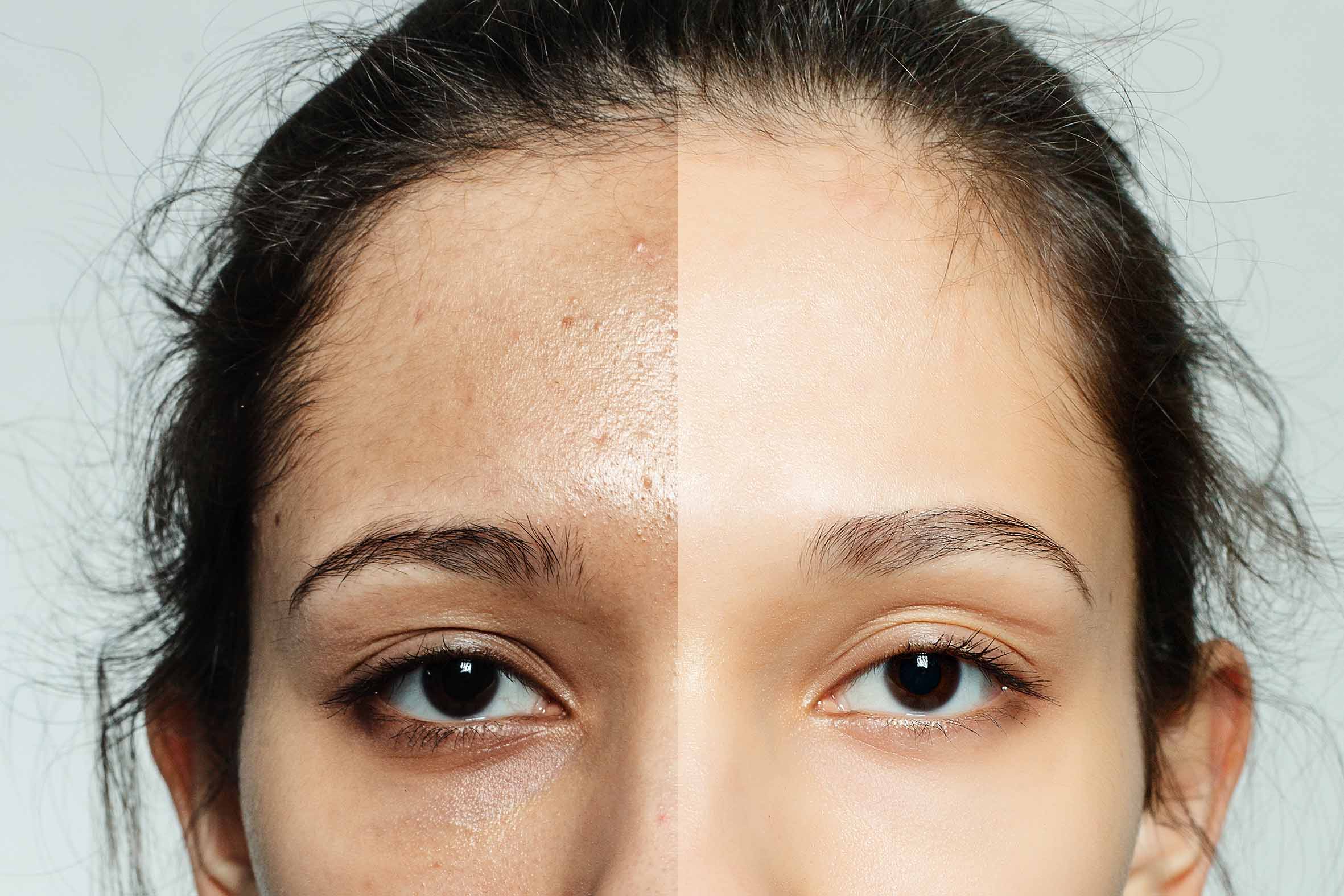
Today, enzyme-based skin renewal treatments such as Cosmelan and Dermamelan offer solutions to pigmentation problems by regulating melanin production. With these treatments, visible results can be obtained as early as the first week. However, achieving a completely spot-free appearance generally takes about 1 to 1.5 months.
In this article, we will explain in detail the differences between these two effective treatment methods, when each one should be preferred, and how the application process unfolds.
What Are Cosmelan and Dermamelan?
Cosmelan and Dermamelan are specialized enzymatic peeling treatments used to address skin pigmentation issues. These treatments suppress pigmentation by reducing the amount of melanin in the skin. They are particularly effective in treating melasma and sun-induced pigmentation.
These applications contain active ingredients such as azelaic acid, kojic acid, ascorbic acid, phytic acid, glycolic acid, and salicylic acid, all known for their effectiveness in lightening pigmentation. Thanks to these active ingredients, melanin production—which gives skin its color—is suppressed at the enzymatic level. This prevents the formation of new pigmentation. Additionally, these treatments not only lighten existing spots but also help prevent new ones from developing.
These treatments can be safely applied in any season and on all skin types (except very sensitive skin). They do not cause wounds on the skin. Temporary side effects such as redness, peeling, and in some patients edema usually resolve on their own within a short time.
What Are the Technical Differences Between Cosmelan and Dermamelan?
When we examine the technical differences between the two treatment methods, the strength of the formula stands out first. While Cosmelan and Dermamelan work on similar principles, there are important differences between them.
Main Difference
Dermamelan has a stronger formula. For this reason, Cosmelan is generally used for new, superficial, and mild-to-moderate pigmentation issues. Dermamelan, on the other hand, stands out as a medical-grade peeling preferred for deep, stubborn, and moderate-to-severe pigmentation problems. Both methods are effective in treating melasma and sun-induced pigmentation, but the depth and severity of the issue determine the choice.
Formula Differences
Because of these formulation differences, skin reactions can vary as well. Dermamelan has a stronger formula and may sometimes cause more redness and peeling on sensitive skin. Cosmelan treatment, by contrast, produces milder effects. Both methods are classified as medical treatments that must be administered under the supervision of a physician.
Application
There are some subtle differences. Both treatments are single-session applications. However, before the procedure, a specialist physician performs a skin analysis to determine which treatment will be used. The duration the mask stays on the skin can vary between 8 and 12 hours, depending on the intensity of the pigmentation and the patient's skin type. With Dermamelan, this duration drops to as little as 4 hours. Both treatments act by suppressing the tyrosinase enzyme that controls melanin production—just at different intensities.
When Is Cosmelan Preferred and When Is Dermamelan Preferred?
In choosing a pigmentation treatment, the patient's skin condition and the severity of the spots are the determining factors. When choosing between Cosmelan and Dermamelan, a detailed skin analysis by an expert dermatologist should be performed first.
Cosmelan treatment is generally preferred for mild and moderate pigmentation issues. It is particularly used for sun spots, mild age-related pigmentation, and to even out skin tone. Cosmelan provides effective results in mild melasma cases, for evening out overall skin tone, and when used with anti-aging goals.
Dermamelan, on the other hand, has a stronger formula and is preferred for more severe and resistant pigmentation problems. It is used in particular for treating deep and stubborn spots, intense melasma cases, and for patients who want a more intense anti-aging effect. Because the Dermamelan formula is stronger, it may sometimes cause more redness and peeling on sensitive skin.

Choosing the Right Treatment by Skin Type and Pigmentation Type
Cosmelan and Dermamelan treatments are effective for the following types of pigmentation:
- Melasma and chloasma
- Post-acne hyperpigmentation
- Sun spots
- Age spots
- Freckles and dark spots
However, in certain situations, these treatments are not recommended. For example, in cases of chronic skin conditions, pregnancy and breastfeeding, open wounds, fresh sunburns, and rosacea, these treatments should be avoided.
Another important consideration in treatment selection is the patient's skin type. While both treatments can be applied to all skin types, Cosmelan may be a safer option for sensitive skin. Seasonal factors should also be considered, although both treatments can be applied at any time of year.
Differences in Application Process and Aftercare
Both treatments begin in a clinical setting under the supervision of a specialist. However, there are important differences in their stages. Cosmelan treatment is generally a single-session application. First, the physician performs a skin analysis to determine the mask's contact time. The mask remains on the skin for between 8 and 12 hours, depending on the intensity of the pigmentation and skin type. After the mask is applied, a 4-month home-care process is required.
Skin reactions after treatment are similar for both. Both may cause mild redness, itching, burning, and a feeling of tightness that disappears within 48 to 72 hours. However, side effects are less severe with Cosmelan, and patient tolerance is higher. The effects of treatment generally begin to appear within the first week. The skin gains a brighter appearance within 2 to 3 weeks. Complete fading of dark spots takes approximately 4 to 6 weeks.
Home care is one of the most notable differences between the two treatments. For Cosmelan, the maintenance cream is used 3 times a day during the first month, then 2 times a day in the second and third months. After the third month, only nighttime use is recommended. With Dermamelan, a full 4-month home-care routine is followed using special products that regulate melanin production. Sun protection is important in both treatments. SPF 50 sunscreen should be applied at least 3 to 4 times a day. After treatment, laser, tanning beds, and epilation should be avoided for a certain period.