
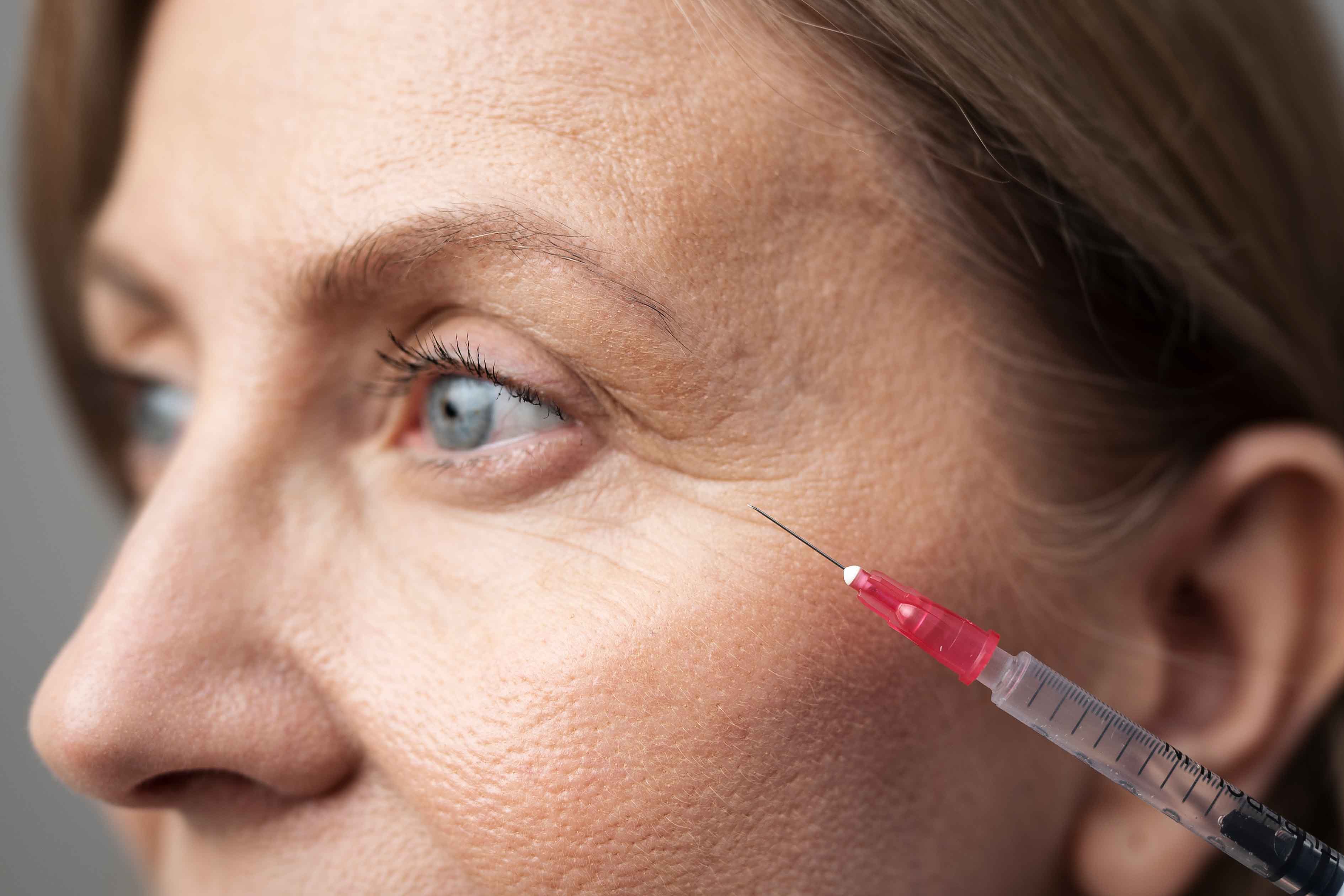
Crow's feet wrinkles are one of the biggest obstacles to a youthful appearance, generally beginning to become prominent from the age of 30 onwards. These fine lines that form at the outer corners of the eyes appear as a natural result of aging.
What Are Crow's Feet Wrinkles?
The fine lines on the outer edges of our eyes, which become especially prominent when we smile, are called crow's feet wrinkles. These lines get their name from their resemblance to a bird's foot and can deepen over time and become more permanent.
Crow's feet wrinkles are lines that form on the thin and delicate skin around the eyes, generally becoming prominent with smiling or facial expression movements. These lines, which spread in a triangular shape from the outer edge of the eye, become more prominent as collagen production decreases with aging. However, they can also be seen at a younger age.
These lines, initially visible only when smiling or squinting, become permanent over time. For this reason, they can be noticed even at rest. The progression of these lines around the eyes is one of the most obvious indicators of skin aging.
Why Do They Form?
With age, crow's feet wrinkles are inevitable. However, there are many factors that cause these wrinkles to appear at an earlier age or become more prominent. The main reason is the decrease in collagen and elastin production in the skin. These proteins give the skin elasticity and firmness. When they decrease, wrinkles form more quickly, especially in delicate areas such as around the eyes.
The skin around our eyes is much thinner than the rest of our face, and there are fewer oil glands. These features cause this sensitive area to be more prone to wrinkles. In addition, continuously repeated facial expressions around the eyes—smiling, blinking, squinting—contribute to the formation of permanent lines over time.
Ultraviolet (UV) rays are one of the most important environmental factors in the formation of crow's feet. Sun rays damage collagen and elastin fibers, accelerating the wrinkle process. In addition, smoking reduces blood circulation in the skin and prevents collagen production. Insufficient water consumption causes the skin to dry out and become more prone to wrinkles.
Sleeping positions such as on the stomach or side can increase the formation of crow's feet wrinkles. Looking for long periods at radiation-emitting devices such as televisions, computers, and smartphones also triggers wrinkles around the eyes. Stress leads to an increase in the cortisol hormone in the body, which accelerates the breakdown of collagen.
Genetic factors also play an important role. If there are family members with prominent eye-area wrinkles at an early age, the likelihood of developing these wrinkles is higher in you as well. The consumption of sugary and processed foods accelerates skin aging. Makeup remaining on the face for a long time or not being cleansed before sleeping also causes early deformation of the eye area.
Medical Treatment Options for Crow's Feet Wrinkles
Modern medicine offers many effective treatment options for Crow's Feet Wrinkles. These treatments vary according to the structure of the skin, the depth of the wrinkles, and personal preferences.
Botox
Botox treatment is considered the gold standard. It temporarily relaxes the muscles around the eyes, reducing the appearance of wrinkles. Botox not only softens existing lines but also prevents wrinkles that may form in the future. Its effect generally lasts 4-6 months, and when applied regularly, it provides a long-term protective effect.
Hyaluronic Acid Injections
These injections are an effective option, especially for deep crow's feet lines. The fillers are injected under the skin to plump up the lines and smooth the surface. In addition, by treating the hollows around the eyes, they create a "light filler" effect. Their effects last about 9-12 months.

Radiofrequency Therapy
Skin renewal with radiofrequency is an FDA-approved method that is effective for skin tightening. In this treatment, the power of radio waves is used to increase the temperature of the skin and trigger collagen production. Thus, the skin gains a firmer and smoother appearance.
PRP Treatment
PRP treatment, also known as vampire aesthetics, is a non-surgical rejuvenation treatment performed using plasma enriched with platelets obtained from the individual's own blood.
Skin Renewal Applications
In addition, skin renewal procedures such as fractional laser, mesotherapy, and microneedling also help reduce the formation of crow's feet wrinkles by increasing collagen production. Mesotherapy, in particular, is performed after applying an anesthetic cream to the eye area and can be safely applied in every season.
In addition, non-surgical face-lifting procedures have also become safer with the technologies developed in recent years. Skin deformations can be corrected with methods such as filler, gold needle, and ultraformer.
For effective results, it is important to support these treatments with the use of sunscreen, which should be applied in every season of the year. Remember that continuity and patience are important in skin care. With regular checkups and expert support, you can achieve successful results in the fight against wrinkles around the eyes.